Are Cities Becoming the Engine of a Modern State Again?
This article is part of the Creative Bureaucracy Festival Spotlight series, exploring ideas, initiatives, perspectives and open debates around the future of government. Guided by the belief that better bureaucracy strengthens democracy, the series creates space for new thinking, critical questions and dialogue about how public institutions can better serve people and society.
By Bernd Fesel
Published: 17 September 2026
Cities and municipalities are being given greater responsibility and more freedom to develop their own solutions. Recent initiatives in the United Kingdom and North Rhine-Westphalia are bringing fresh momentum to this debate. For the Creative Bureaucracy Festival, they raise a central question: How can local change help modernise government as a whole?
From housing and mobility to climate adaptation and public services, cities and municipalities are where political decisions meet everyday life. This is where we see whether policies work together and which solutions deliver results. It makes sense, then, to approach government modernisation from a local perspective.
“Place First”: Shaping Policy Around Places
Peter Kurz, former Mayor of Mannheim, and Philipp von der Wippel, founder of ProjectTogether, describe this shift in perspective in their guest commentary in Handelsblatt. Under the guiding principle of “Place First”, British Prime Minister Andy Burnham puts the local impact of policy centre stage. Cities and regions are to gain greater decision-making power. At the same time, different policy areas should work more closely together: Plans developed in separate government departments must come together coherently in the places where people live.
North Rhine-Westphalia Creates Space for Local Experimentation
North Rhine-Westphalia also wants to give municipalities greater freedom to act. In May 2026, the state government introduced a package of measures to reduce bureaucracy. One component is proposed legislation allowing municipalities to apply for temporary exemptions from certain state-level rules, subject to approval by the responsible ministry.
This could enable municipalities to test new approaches to administrative organisation or digital services, for example. Successful solutions could then be incorporated into state law. The proposal therefore creates an important link between local experimentation and lasting changes to government structures. Further details are available from the Government of North Rhine-Westphalia.
Cities as Places of Creativity and Change
The idea of cities as a starting point for societal renewal has a long history. In his 2006 book The Art of City Making, Charles Landry, co-founder of the Creative Bureaucracy Festival, argued for understanding urban development as a creative and collaborative process. His new publication, The Art of City Making: A Manifesto, revisits these ideas. Central to this vision is an administrative culture that opens up possibilities and works collaboratively to put good ideas into practice.
Liveable Cities Need Creative Bureaucracy
For us, these approaches highlight a crucial task: Municipalities need the powers, resources and trust to make use of their freedom to act. Equally important are spaces where they can share experiences, learn from unsuccessful attempts and help others benefit from solutions that work.
Liveable cities need creative bureaucracy. That is why the question of how cities and municipalities can gain greater responsibility, freedom to act and capacity to innovate will be one of the key themes of the Creative Bureaucracy Festival 2027. We want to explore which freedoms make a difference locally and how individual innovations can lead to lasting change in public institutions.
We welcome perspectives and examples from Germany and around the world: Where are municipalities already gaining greater decision-making power, and what can we learn from their experiences? Contact us to share your experiences and ideas.
ABOUT THE AUTHOR
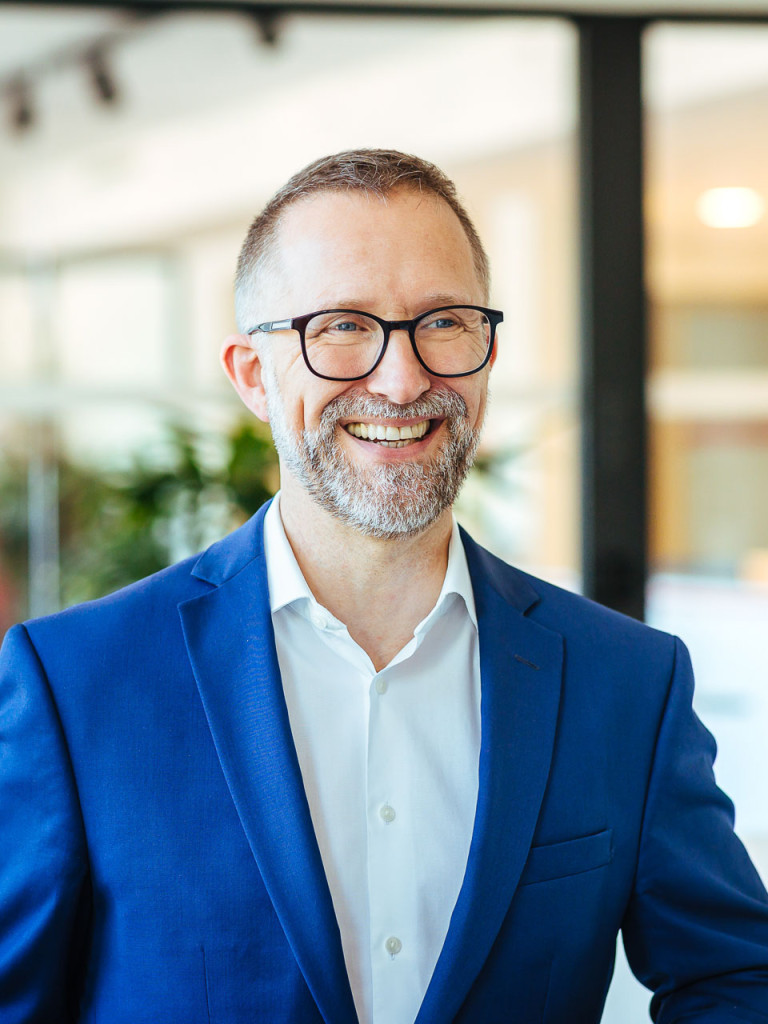
Bernd Fesel studied economics and philosophy in Heidelberg and Bonn. Inspired by his acquaintance with Professor Gerhard Hoehme of the Düsseldorf Art Academy, he became a gallery owner in 1990 and later served as Managing Director of both the German and the European Association of Galleries.
He subsequently founded an art fair for emerging artists and a company specialising in art logistics and transport. In 2004, he established the German Annual Conference of the Creative Industries in Berlin, followed by the European Creative Industries Summit.
From 2007 to 2018, he worked in the Ruhr region, first as Deputy Director of the European Capital of Culture RUHR.2010, and later as Senior Advisor to the Legacy Institute, the European Centre for Creative Economy in Dortmund. In 2011, he initiated the European Creative Business Network, now known as Creative FED, which he later led as Director.
Most recently, Bernd Fesel was the founding CEO of EIT Culture & Creativity, a European partnership dedicated to fostering innovation in the cultural and creative sectors. EIT Culture & Creativity is headquartered in Cologne and operates regional hubs in Amsterdam, Barcelona, Bologna, Helsinki, Košice and Vienna.
ABOUT THE CREATIVE BUREAUCRACY FESTIVAL
Public administration, too, has excellent, creative solutions for almost every challenge facing society — the Creative Bureaucracy Festival brings them to the stage and the people behind them into conversation. The festival, in the words of its President Charles Landry, stands for the shift from a "No, because" culture to a "Yes, if" culture that embraces new ideas with enthusiasm. Through the presentation of the Creative Bureaucracy Awards, the festival also aims to strengthen the public reputation of administration. The Global Forum of Public Service Leaders, which begins on the day before the festival, is the annual gathering of public sector leaders from around the world. The Young Bureaucrats Event addresses the next generation of creative talent in the public sector. Further information can be found at https://creativebureaucracy.org/.