USING THE PLAYFUL TO UNLOCK THE SERIOUS
This essay is part of Creative Bureaucracy: Where Next & How?, the 2026 Creative Bureaucracy book conceived and edited by Charles Landry and Sebastian Turner. The publication brings together voices from around the world—including civil servants, designers, scholars and public innovators—to explore where public institutions should go next, and how they can get there.
In her essay, Robyn Bennett reflects on what five years of helping to build the Creative Bureaucracy Festival taught her about institutional change. She argues that play, trust and human connection are not peripheral to serious reform, but essential conditions for creative risk-taking, collective agency and keeping the future open to possibility.
By Robyn Bennett
Published: 1 September 2026
“Prove Kafka wrong” was the Creative Bureaucracy Festival’s slogan in 2024, the centenary of Franz Kafka’s death. A person wandered the halls in a full cockroach costume, stopping delegates to ask: what have you done to prove Kafka wrong?
Kafka gave us Gregor Samsa, the man who wakes one morning transformed into a cockroach, trapped inside a system that cannot see him. Watching people’s faces as the cockroach approached (the flicker of confusion, then delight) it struck me as a precise image of what the Festival had learned to do: use the playful and unexpected to unlock the serious.
I spent five years helping to build the Creative Bureaucracy Festival, and what that work taught me, above all, is that the conditions under which people are willing to take creative risk is profoundly psychological and relational – and almost nobody is designing for them deliberately. People do not reform institutions because they have read the right report. They do it because something in them feels recognised, accompanied and safe enough to act.
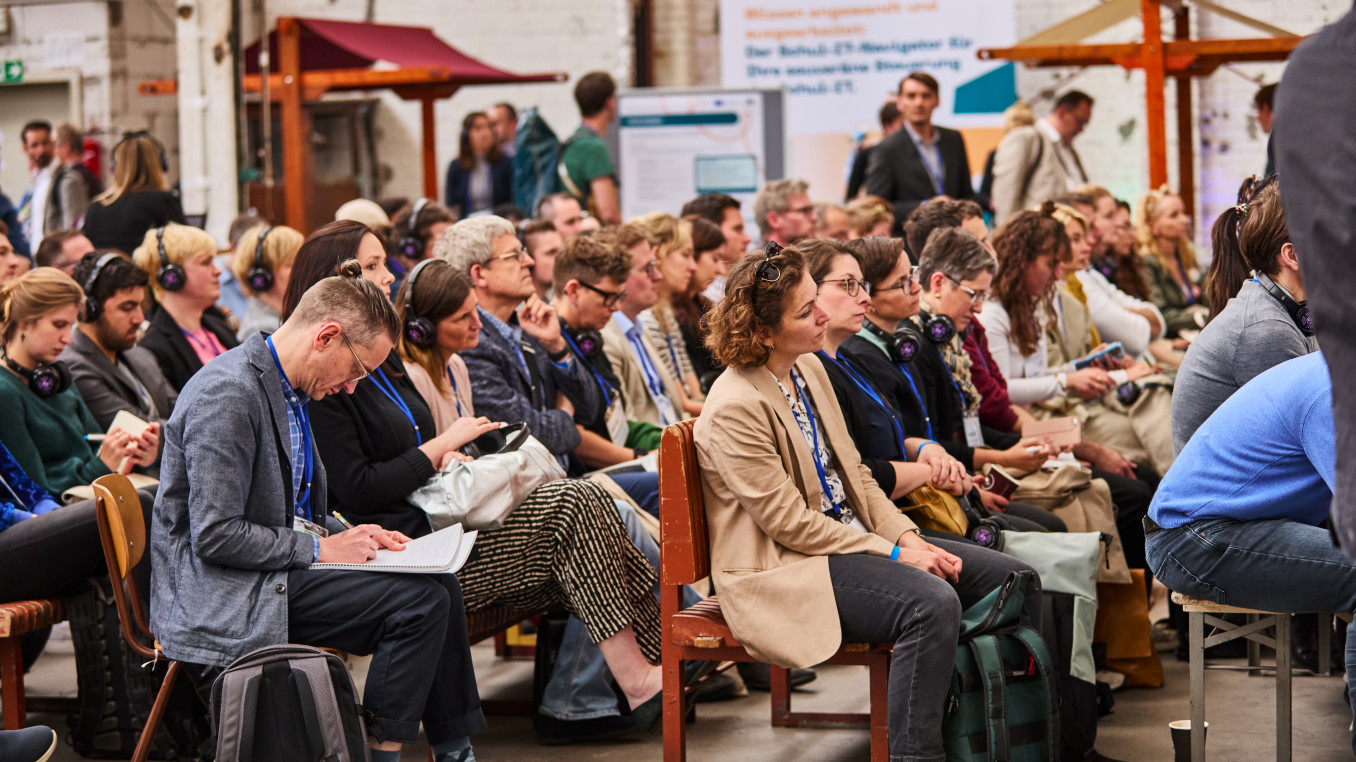
What I kept witnessing, across cities and cultures and levels of government, was how differently people behaved when the container shifted. Hierarchy asserts itself in formal settings. But in a space designed to hold people differently, it loosens. Someone once described the Festival as “oxygen for public servants”. What I heard in that was not about the event itself. It was a deeper deprivation: a lack of possibility, of solidarity, of being seen as a creative agent rather than a delivery mechanism.
Restoring play and wonder to conversations about reform is not a luxury. It is the work. A playful attitude functions as a method: it opens space for reframing problems, for seeing sideways, for testing without fear of failure. It loosens the grip of rigid procedures and invites curiosity, enabling practitioners to discover solutions they could not have anticipated in advance.
In that sense, play is not the opposite of seriousness but a pathway to it. Through experimentation, imagination, and a willingness to suspend the obvious, bureaucracy can shift from a system of constraint to a platform for invention—quietly, persistently, and often in ways Kafka himself might not have believed possible.
Frameworks and mandates matter as they create the enabling conditions and signal what is sanctioned. But alone they are never sufficient. What carries change through an institution is something more like what biologists call the interstitium: the fluid connective tissue between the named structures, only recently recognised as an organ in its own right. Trust. Discretionary effort. The willingness to carry the reform when the formal programme has moved on. None of that can be mandated into existence. It can only be cultivated, which requires sustained attention to the informal architectures that institutions consistently undervalue: the corridor conversations, the cross-city peer relationships, the spaces where people recover their sense of possibility.
Institutionalise these and you risk killing what made them alive. Leave them informal and they remain fragile and unscaled. The dance between structure and aliveness is not a problem to solve once, but a tension to be continuously worked.
So when I ask where next, my honest answer is not a policy lever or a governance model. It is a reorientation of attention, and an honest reckoning with how deeply the current system is broken. Not underperforming. Fundamentally out of step with the complexity of what is coming. In that gap, something dangerous is being built: the slow narrowing of options, the capture of institutions by concentrated power, the incremental narrowing of futures we might otherwise have chosen.
What keeps our futures open? The answer I keep returning to is the deliberate construction of new system infrastructures—ones that can harness collective agency and connect it into the wider machinery of governance and finance. Not patches on what exists, but new forms built for the complexity we are actually in, and for the people who still believe we can navigate it together. Public servants are among the essential builders of these forms, not despite their institutional roles, but because of what they can uniquely enable from inside them: the permissions, the connections, the resources, the legitimacy that no one outside can provide.
The creative bureaucracy was never just about making government more imaginative. At its most serious, it was always about keeping the future negotiable. That is what is at stake now.
ABOUT THE AUTHOR
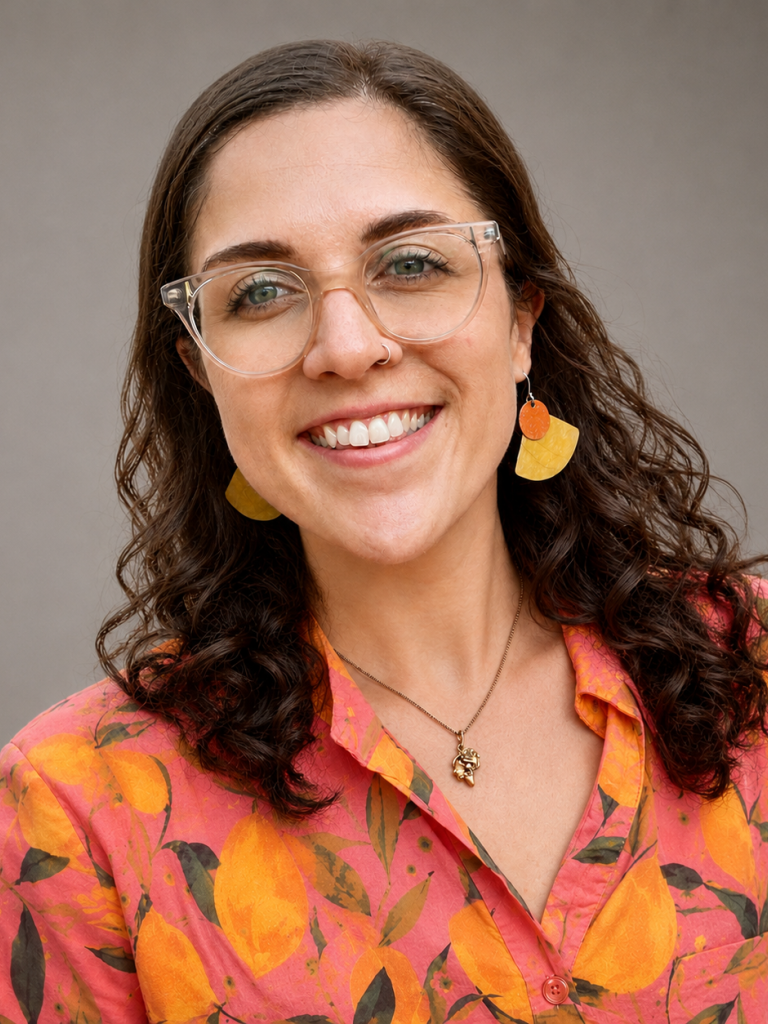
Robyn Bennett co-leads Expanding Civilizational Optionality (xCO) at Dark Matter Labs, a body of work focused on how we keep futures open in a time of degenerative volatility, weaving together systemic finance, risk intelligence, governance design and large-scale organising. A linguist and social anthropologist at heart, she comes to it from a decade in cross-sector innovation: co-building the Creative Bureaucracy Festival into a global platform for public sector transformation, and working with the African Centre for Cities, the Goethe-Institut, and the School of International Futures, among others. Based in Berlin, she co-hosts the Womxn ∞ Power community, co-writes the Substack Money, Honey?, and is an inaugural fellow of The Institutional Architecture Lab (TIAL).
ABOUT THE CREATIVE BUREAUCRACY FESTIVAL
Public administration, too, has excellent, creative solutions for almost every challenge facing society — the Creative Bureaucracy Festival brings them to the stage and the people behind them into conversation. The festival, in the words of its President Charles Landry, stands for the shift from a "No, because" culture to a "Yes, if" culture that embraces new ideas with enthusiasm. Through the presentation of the Creative Bureaucracy Awards, the festival also aims to strengthen the public reputation of administration. The Global Forum of Public Service Leaders, which begins on the day before the festival, is the annual gathering of public sector leaders from around the world. The Young Bureaucrats Event addresses the next generation of creative talent in the public sector. Further information can be found at https://creativebureaucracy.org/.
ABOUT THE BOOK — CREATIVE BUREAUCRACY: WHERE NEXT & HOW?
Creative Bureaucracy: Where Next & How? — The 1st Creative Bureaucracy Global Report 2026 brings together 24 contributors from government, academia, cities, philanthropy, design and public innovation to explore how far the idea of creative bureaucracy has travelled, whether it is making a tangible difference and where the movement should go next. Featuring internationally recognised thinkers and practitioners alongside leading voices from governments, cities and innovation organisations around the world, the report offers a broad range of perspectives on how public institutions can become more capable, humane, imaginative and effective. Its chapters examine themes including the future of the state, public-sector leadership, service design, implementation, civic imagination and the human qualities needed in governance, such as judgement, care, courage, playfulness and agency. Edited by Creative Bureaucracy Festival co-founders Charles Landry and Sebastian Turner, the report seeks to help shape a new operating logic for governance—one that combines imagination with implementation, experimentation with accountability, and public purpose with democratic trust. For more information, contact info@creativebureaucracy.org.