Serving Through Uncertainty: Creative Bureaucracy in Prague
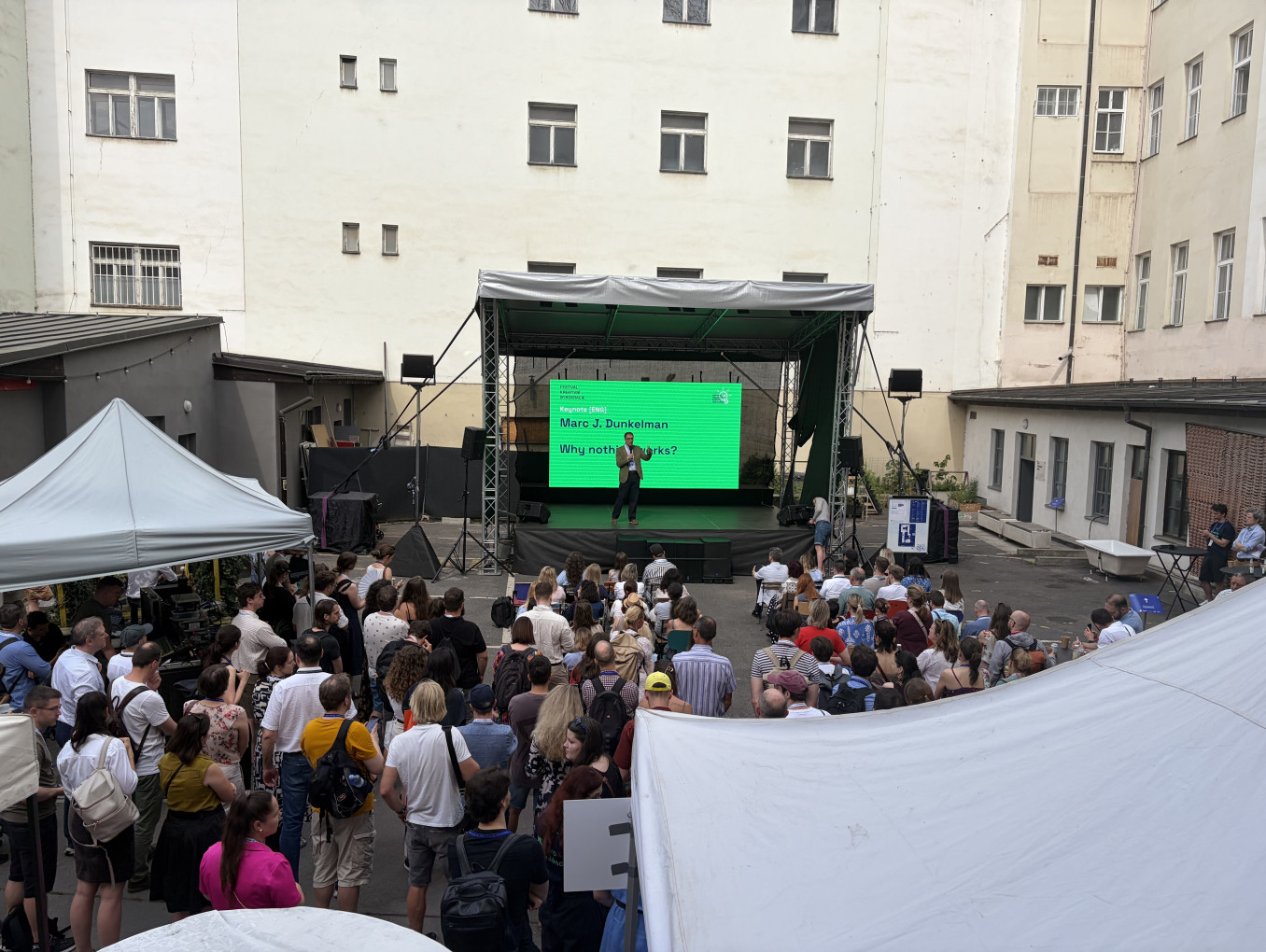
Just under two weeks after the Creative Bureaucracy Festival brought the international public-sector innovation community together in Berlin, the Creative Bureaucracy Festival Hub Prague continued the conversation at Kampus Hybernská.
Around 500 participants from public administration, civil society, academia and the private sector came together under the central question: “How do you serve your country when the world is shaking?” The programme explored how governments and public servants can remain effective, resilient and responsive amid growing political, social and technological uncertainty.
Balancing Power and Accountability
One of the programme’s central voices was Marc J. Dunkelman, professor at Brown University and author of Why Nothing Works. Drawing on examples from the United States and Europe, he examined a defining tension in modern government: how to give public institutions enough power to solve major problems while protecting citizens from the misuse of that power.
Dunkelman argued that democratic systems can become so focused on checks, consultation and preventing abuse that they struggle to make decisions and deliver visible results. The challenge, he suggested, is not simply to remove regulation or weaken institutions, but to balance legitimate competing priorities while ensuring that accountable decisions can still be made.

Local and Regional Perspectives
Local and regional voices also played a central role. Constitutional lawyer Jan Kysela of Charles University, Katarína Staroňová of Comenius University Bratislava and Maciej Ruczaj of the Polish Institute in Prague explored democratic resilience, institutional loyalty and the rule of law.
Further sessions examined the responsible use of AI in government, featuring Czech Government AI Commissioner Lukáš Kačena, former Anthropic researcher Stanislav Fort, Deloitte’s Jan Hejtmánek and Filip Hartmann of prg.ai.
Local and Regional Perspectives
Local and regional voices also played a central role. Constitutional lawyer Jan Kysela of Charles University, Katarína Staroňová of Comenius University Bratislava and Maciej Ruczaj of the Polish Institute in Prague explored democratic resilience, institutional loyalty and the rule of law.
Further sessions examined the responsible use of AI in government, featuring Czech Government AI Commissioner Lukáš Kačena, former Anthropic researcher Stanislav Fort, Deloitte’s Jan Hejtmánek and Filip Hartmann of prg.ai.
Public Administration in Practice
The programme remained closely connected to the realities of Czech public administration. Sessions addressed the management of Prague, the redesign of the national data-box system, public-sector leadership, clearer government communication, regional inequality, citizen participation and the Čitelná Praha wayfinding system.
Contributors represented organisations including the Digital and Information Agency, ROPID, Czechdesign, the Ministry of Labour and Social Affairs, Česko.Digital and the Technology Agency of the Czech Republic.
Together, these discussions reflected the festival’s wider message: public administration must protect democratic values while also delivering visible and effective results.
Strong Local Partnerships
The Prague Hub is organised by Byro, a Czech nonprofit platform supporting people who are working to make public administration more capable, open and trustworthy.
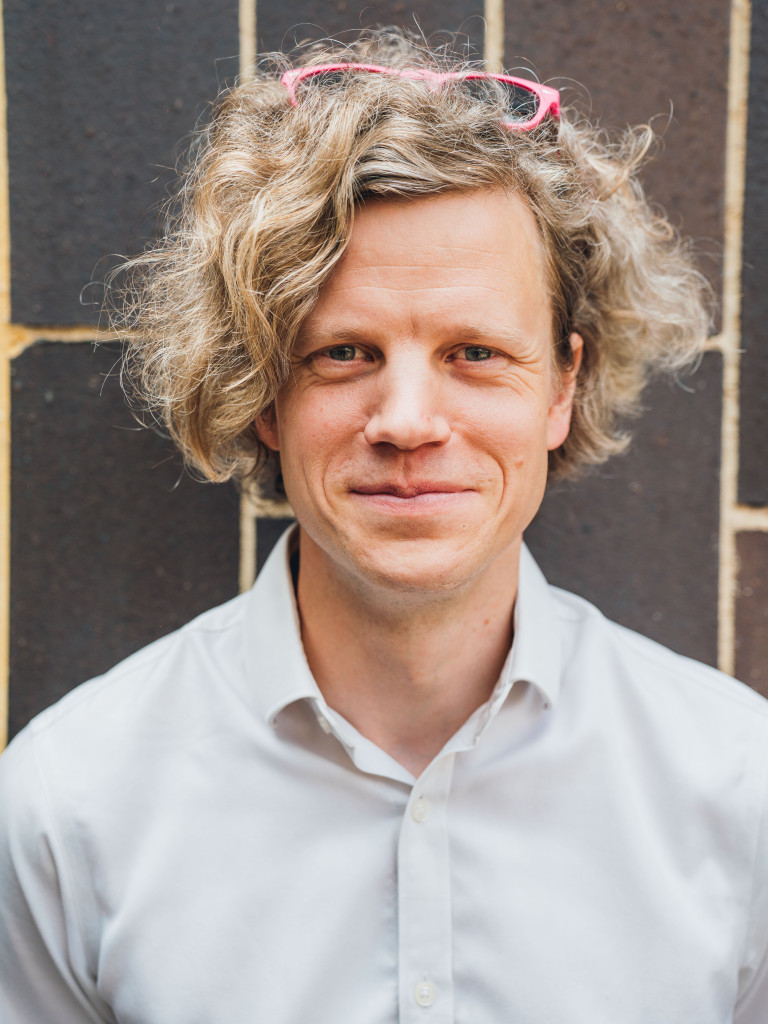
At the centre of the festival is Matěj Chytil, co-founder of Byro and the driving force behind the Prague Hub. His commitment to strengthening the Czech public sector and connecting local reformers with the wider Creative Bureaucracy community has shaped the festival from the beginning.
The event was co-financed by the City of Prague, with Deloitte as its main partner and support from Kampus Hybernská and Frumoš. Together, these partnerships created a space where local experience could connect with international ideas, while remaining rooted in the realities of Czech public administration.
ABOUT THE AUTHOR
Nathan Hayduk is Senior Programme and Partnerships Manager at the Creative Bureaucracy Festival in Berlin, where he curates the international programme and develops partnerships with public institutions, policymakers and civil society organisations. His work focuses on public-sector innovation, international cooperation and new approaches to collaboration between government and civil society. He previously held roles with the U.S. Commercial Service and the U.S. Department of State and holds a master’s degree in International Relations and Cultural Diplomacy. His published research examines transatlantic vocational exchange.
ABOUT THE CREATIVE BUREAUCRACY FESTIVAL
Public administration, too, has excellent, creative solutions for almost every challenge facing society — the Creative Bureaucracy Festival brings them to the stage and the people behind them into conversation. The festival, in the words of its President Charles Landry, stands for the shift from a "No, because" culture to a "Yes, if" culture that embraces new ideas with enthusiasm. Through the presentation of the Creative Bureaucracy Awards, the festival also aims to strengthen the public reputation of administration. The Global Forum of Public Service Leaders, which begins on the day before the festival, is the annual gathering of public sector leaders from around the world. The Young Bureaucrats Event addresses the next generation of creative talent in the public sector. More infomration can be found at https://creativebureaucracy.org/.
ABOUT THE CREATIVE BUREAUCRACY FESTIVAL HUBS
Creative Bureaucracy Festival Hubs bring the spirit of the Berlin festival to cities and communities around the world. Developed with trusted local partners, each Hub creates a platform for public servants, policymakers, civil society, academia and business to explore the challenges facing public administration in their own context. While every Hub reflects local priorities, speakers and administrative cultures, all share the same goal: to strengthen a growing international community committed to more creative, capable and people-centred government.
The Prague Hub is one example of how this model connects international ideas with local experience and creates lasting exchange beyond the main festival in Berlin.
Interested in bringing a Creative Bureaucracy Festival Hub to your city or region? Get in touch with us at info@creativebureaucracy.org to explore how we can develop a locally rooted Hub together.
Each Hub is led by a trusted local partner. In Prague, this role is taken by Byro, with co-founder Matěj Chytil serving as the driving force behind the festival and its connection to the wider Creative Bureaucracy community. Matěj Chytil is a Czech civil servant, public policy practitioner and co-founder of BYRO, a platform supporting creative and mission-driven people across public administration. He studied law and public policy at universities in Prague and Oxford. Over the course of his career, he has worked in government, NGOs, political consulting and the private sector, with a focus on sustainability, urban development and organizational change.