From Isolated Innovators to a National Community: The Story of PUBBLICA
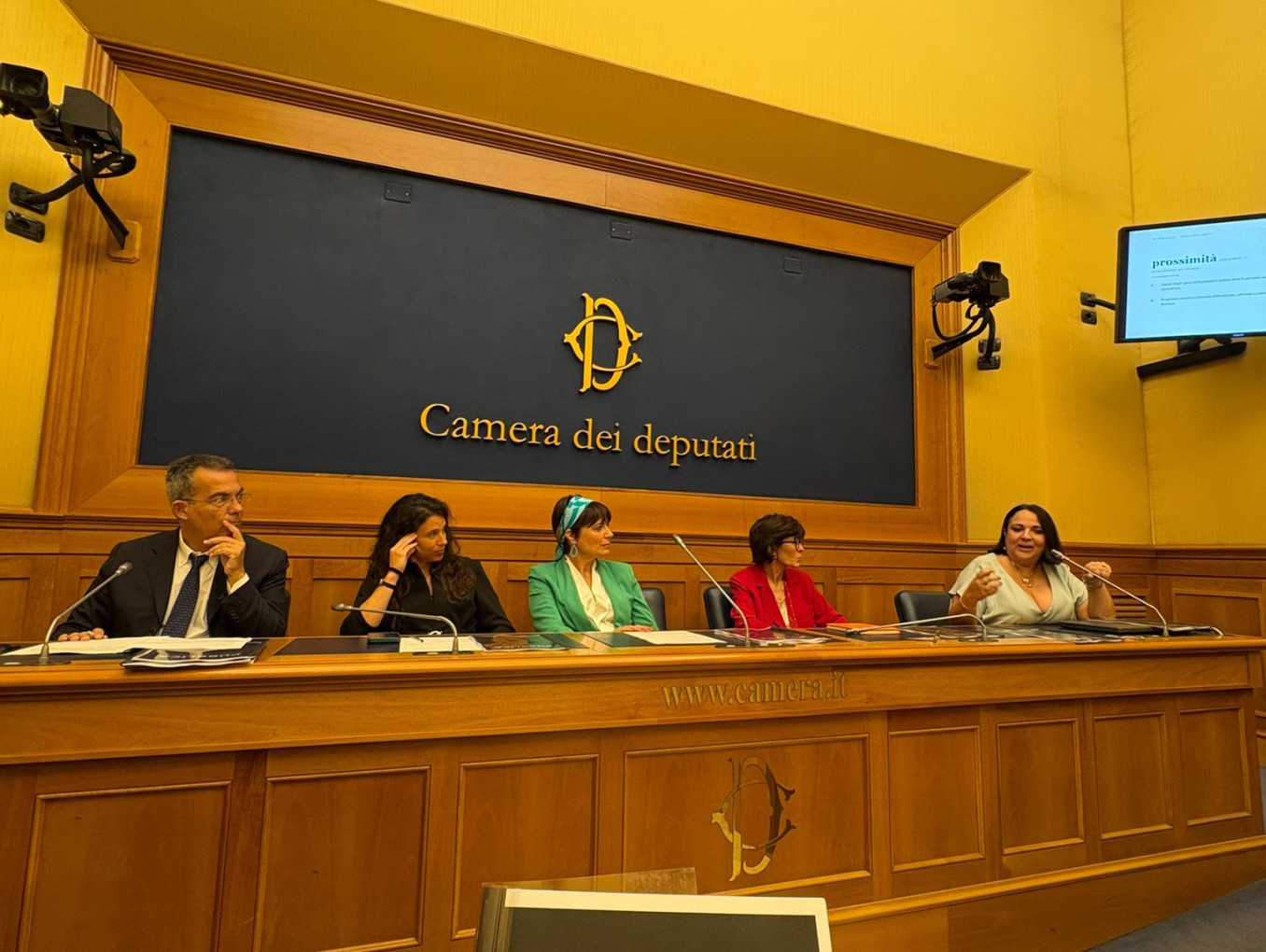
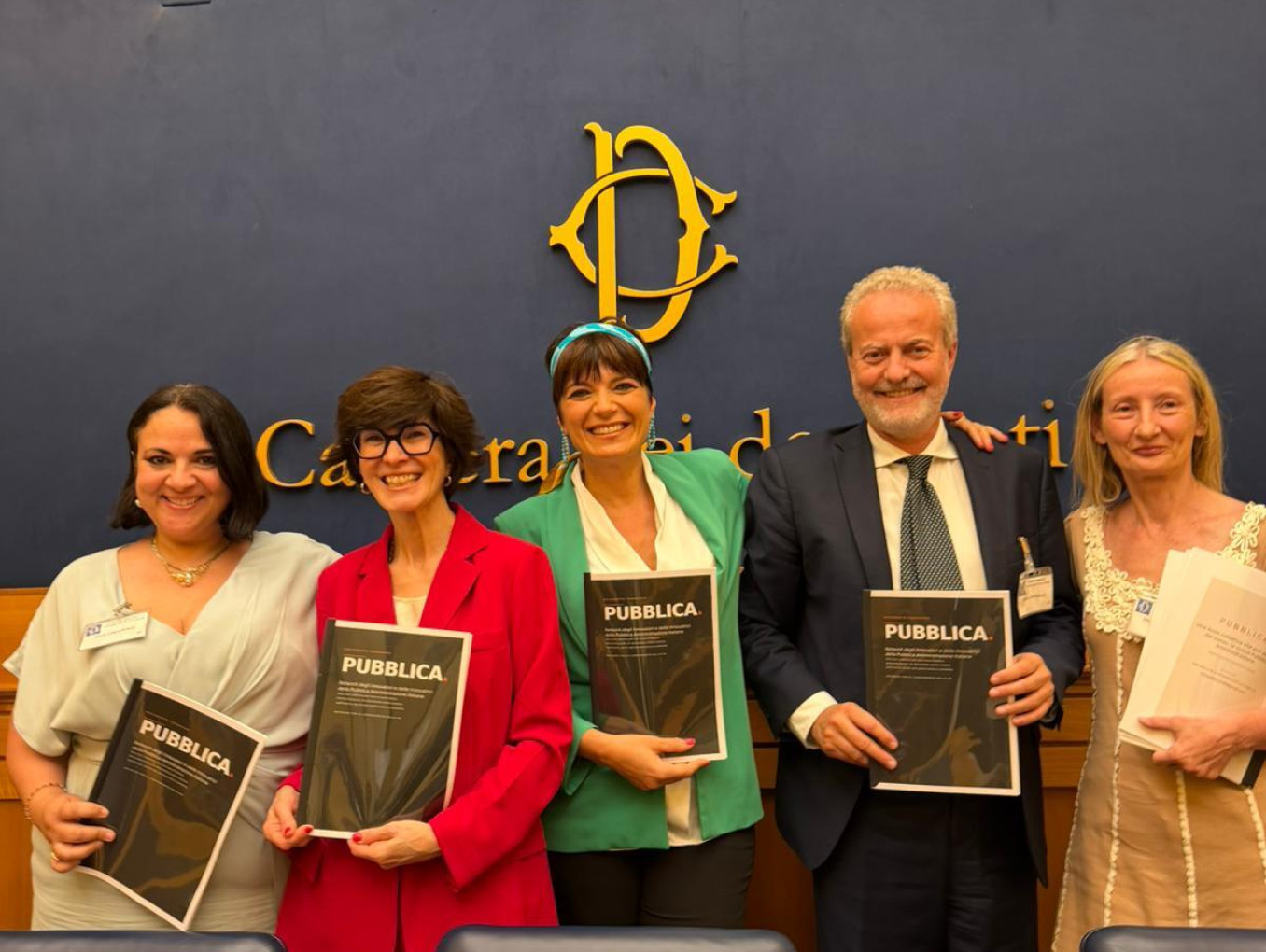
What happens when public servants who are already changing institutions from within stop working in isolation and begin to recognise themselves as a community? This is the question behind PUBBLICA, a new national network connecting people who work across the Italian Public Administration and are committed to making institutions more open, collaborative, effective and responsive to the needs of citizens and territories. PUBBLICA was officially launched in Rome on 18 June 2026, during a press conference at the Italian Chamber of Deputies. The event marked the public beginning of a wider process: bringing together public employees who are already promoting change in their organisations, often without visibility, recognition or opportunities to exchange experiences with colleagues working in other sectors. The launch was more than the presentation of a new network. It was also a statement about the role of public servants as active agents of institutional transformation.
Change Does Not Happen Only Through Reform
Public Administration is often discussed in terms of legislation, digitalisation, efficiency and organisational reform. These dimensions are undoubtedly important, but they are not sufficient. Institutions also change through the everyday actions of the people who work within them. Public employees are often the first to recognise where procedures are no longer effective, where services fail to respond to real needs and where new forms of collaboration could improve the relationship between institutions and communities. They understand organisational constraints, but they also see possibilities that are not always visible from outside. PUBBLICA starts from this perspective. Its central idea is that sustainable institutional change cannot be imposed exclusively from above. It must also be built from within, by supporting the people who experiment with new approaches, improve processes, create connections and introduce more collaborative ways of working. For this reason, the key word for PUBBLICA is not only innovation. Innovation is too often understood as technological change. PUBBLICA adopts a broader perspective, focused on cultural, organisational, procedural and relational transformation. The aim is to contribute to a Public Administration that is more human, more effective and closer to the actual needs of people and places.
The People Behind the Network
The initiative was promoted by Mariella Stella, a PhD researcher whose work focuses on social innovation and change within Public Administration, together with a group of eight innovators working across different sectors of the Italian public system. As part of her doctoral research, Stella completed a research internship at the Falling Walls Foundation and collaborated with Berlin’s Creative Bureaucracy Festival during its two most recent editions. This international experience strongly influenced the development of PUBBLICA.
The People Behind the Network
The initiative was promoted by Mariella Stella, a PhD researcher whose work focuses on social innovation and change within Public Administration, together with a group of eight innovators working across different sectors of the Italian public system. As part of her doctoral research, Stella completed a research internship at the Falling Walls Foundation and collaborated with Berlin’s Creative Bureaucracy Festival during its two most recent editions. This international experience strongly influenced the development of PUBBLICA.
The network brings into the Italian context many elements of Charles Landry’s vision of creative bureaucracy: an administration that is open, interdisciplinary and relational, capable of connecting different forms of knowledge and creating new relationships both within institutions and with the communities they serve. PUBBLICA therefore stands at the intersection of research, professional experience and civic commitment. It was not designed as an abstract model or as a temporary project. It emerged from direct knowledge of public institutions and from the experience of people who have tried to introduce change in complex organisational environments.
A Cross-sector Community of Practice
PUBBLICA is a grassroots, independent and non-partisan network. It brings together people working in different areas of the Italian Public Administration, including local and regional government, healthcare and welfare, schools, universities and research institutions, libraries, cultural organisations and public-sector training. These professional environments are different, yet many of the challenges faced by their employees are remarkably similar. They include organisational resistance, fragmented responsibilities, complex procedures, limited opportunities for professional exchange and the difficulty of transforming isolated experiments into long-term institutional practices. PUBBLICA seeks to respond to this fragmentation by creating a horizontal community of practice. The network is intended as a space in which public servants can share experiences, questions, methods and practical tools. Its purpose is not to establish another formal structure, but to strengthen relationships between people who are already working towards change. Peer learning is central to this approach. Every participant can contribute according to their experience, skills and availability, while also finding colleagues with whom to discuss the everyday challenges of public-sector work. The network is open to people of all ages, roles and professional backgrounds. Innovation, in this perspective, is not linked to seniority, hierarchy or job title. It is an attitude that can be found among teachers, administrative staff, researchers, managers, local government officers, healthcare professionals and employees working in welfare and cultural institutions.
From Individual Experiments to Collective Capacity
Across Italy, many public employees are already redesigning services, simplifying procedures, introducing participatory processes, creating partnerships with civil society organisations and testing new approaches to collaboration. However, these experiences often remain confined to individual offices, organisations or territories. When they are not shared, documented or connected to other initiatives, their impact may remain limited. Valuable knowledge can disappear when a project ends, a colleague moves to another role or organisational priorities change. PUBBLICA was created to give continuity to this work. Its purpose is not simply to collect examples of innovation, but to create the conditions in which experiences can meet, be discussed and become shared knowledge. This means moving from isolated practices to collective capacity. Joining PUBBLICA means entering into a relationship with people who share a commitment to institutional change and who are willing to exchange experiences, questions and competencies. It also means recognising that change is not an individual responsibility. People who innovate within institutions often do so in difficult conditions. They may face resistance, lack of time, rigid procedures or a sense of professional isolation. A community of practice can help transform this isolation into mutual support, learning and collective agency.
The Themes at the Centre of PUBBLICA
The network will focus on several areas that are crucial for the future of public institutions. These include administrative capacity, organisational innovation, simplification, the quality of public-sector work, leadership, citizen participation and collaboration between institutions, communities and territories. These themes are deeply interconnected. Improving services requires more than introducing new tools. It also requires investing in organisational relationships, professional development and the capacity of institutions to learn from both successful and unsuccessful experiences. PUBBLICA therefore understands innovation as a continuous learning process. It is not only about producing new solutions, but also about creating the organisational conditions in which people can ask questions, test ideas and learn together.
An Open National Network
The PUBBLICA website is now online and gives access to the network’s founding document, the recording of the launch conference and the membership form. Membership is free and open to people working within the Italian Public Administration. No formal experience in innovation is required. What matters is motivation, openness to sharing and a collaborative approach. The founding document presents PUBBLICA as a network for change within Public Administration: a change built together with those who work in institutions every day and who understand their limitations, efforts and possibilities. Its ambition is to develop a long-term community capable of supporting public servants, circulating practical knowledge and strengthening the collective ability to act within different institutional contexts.
Looking Ahead
The first national in-person gathering of the PUBBLICA community will take place in Matera on 28 November 2026. The meeting will be open to everyone who has joined the network and will offer an opportunity to meet, exchange experiences and define the next activities together. It will not be conceived as a conventional conference. Instead, it will represent the first collective step in building the network’s shared agenda and turning its founding principles into concrete forms of collaboration. PUBBLICA is based on the belief that institutional change does not begin only with large reforms. It can also begin with a conversation between colleagues, a shared problem, a practical experiment, a new relationship or the decision to stop facing the challenges of public-sector innovation alone.
Further information are available at www.pubblicanet.com.
Published: 8 September 2026
ABOUT THE AUTHOR
Mariella Stella is a PhD researcher at the University of Milano-Bicocca, focusing on innovation in public administration. With over 20 years of experience in the public sector, she recently led the Departments of Culture and Tourism, Education, and Youth Policies for a Municipality. Her work bridges institutions and communities through innovative policies and participatory processes, especially in the cultural and creative industries.
In 2012, she co-founded Casa Netural, an international hub for social innovation in Southern Italy. From there, she launched different projects, reimagining rural areas as spaces of experimentation and shared futures.
She is an expert in territorial empowerment, civic innovation, and gender policies. For over a decade, she has been designing and leading civic engagement initiatives and local development strategies. She firmly believes in the power of trust and collaboration to build a more responsive and inclusive public sector.
ABOUT THE CREATIVE BUREAUCRACY FESTIVAL
Public administration, too, has excellent, creative solutions for almost every challenge facing society — the Creative Bureaucracy Festival brings them to the stage and the people behind them into conversation. The festival, in the words of its President Charles Landry, stands for the shift from a "No, because" culture to a "Yes, if" culture that embraces new ideas with enthusiasm. Through the presentation of the Creative Bureaucracy Awards, the festival also aims to strengthen the public reputation of administration. The Global Forum of Public Service Leaders, which begins on the day before the festival, is the annual gathering of public sector leaders from around the world. The Young Bureaucrats Event addresses the next generation of creative talent in the public sector. More information can be found at https://creativebureaucracy.org/.