George Papandreou: Creative Bureaucracy and the Democratic Power of Imagination
Former Greek Prime Minister George Papandreou calls for a new form of democratic governance that restores citizens’ agency, dignity and pride.
Why are citizens losing faith in democracy—and how can governments rebuild it? In his speech following the Global Forum of Public Sector Leaders the night before the Creative Bureaucracy Festival 2026, former Greek Prime Minister and Rapporteur-General on Democracy of the Parliamentary Assembly of the Council of Europe, George Papandreou argues that creative bureaucracy must be about more than administrative innovation. It must restore imagination to politics and give citizens the opportunity to become active co-creators of their shared future.
Drawing on his experience leading Greece through the global financial crisis, Papandreou reflects on the consequences of lost agency, political humiliation and declining public trust. He introduces the ancient Greek concept of thymos—the spirited part of the human soul that seeks dignity, justice and recognition—as a key to understanding contemporary anger and identity politics.
His message is both a warning and an invitation: democracy must reinvent the state before anti-democratic forces do it for us. Creative bureaucracy can help make democracy tangible by building institutions that listen, deliver and enable people to contribute to the common good.
"Creative bureaucracy is not simply innovation. It is the recovery of imagination — a much-needed rebirth of imagination in politics, in governance, in the institutions that make democracy real.”
George Papandreou, Former Prime Minister of Greece
Read the full transcript of George Papandreou’s address below.
Keynote Address: Creative Bureaucracy
George Papandreou
Presented on 10 June 2026
Dear Friends,
Talking with the younger generation, I am often asked: "Why democracy?" And in many of our democracies today, I find that "politics" has become a dirty word.
But for the ancients, in Athens, politics was closer to a revelation. That we - the members of the city - need no tyrant, no king, no high priest to decide our future. That we can imagine a better future, and make it happen, together.
Today, politics has become much less about imagining, and much more about acrobatics - another Greek word, meaning “to walk on the edge”. That is too often our politics today: energy spent and behaviour adapting to the next tweet, the right sound bite, counting likes, reading polls, courting funders for the next campaign.
This is why this Festival, Charles, is admirable. Creative bureaucracy is not simply innovation. It is the recovery of imagination - a much-needed rebirth of imagination in politics, in governance, in the institutions that make democracy real.
Yet here is the paradox. Just as the old model of bureaucracy - built for stability, for control, for treating every case the same - must become something new: a mission-oriented, long-term governance that you and many of the eminent participants here propose - there is less and less public appetite for exactly that.
Because we live in an age of insecurity. Climate. Inequality. Oligarchic capture. AI. I need not list all that brings precarity, injustice, mistrust - even fear of what comes next. And in such an atmosphere, people don't want risk. They don't want experimentation. They close their doors, even turn away from reason and science. Looking for saviours and safety.
So what are we missing?
Let me speak from experience.
I have lived through crises - and managed them. Many. I've seen success and failure. I've won elections and lost them. I've been loved, and I've been hated.
One crisis I dealt with - the global financial crisis - struck Greece as the deepest in our recent history. I was elected in the middle of it. My slogan was simple: we change, or we sink. People knew - wanted change to come.
Even as we took the most drastic measures to survive - cutting wages, raising taxes, cutting pensions - people supported us. I remember walking into taverns, and people rising to applaud.
Why? Because it felt like a common mission. A patriotic one. We all became the agency of change. Everyone had something to contribute. The energy was stunning - in every ministry, every department, from the cabinet to local government. We fought corruption, clientelism, opacity, nepotism. Because this was never only a financial crisis. It was a crisis of democratic governance. It was a crisis of the capture of democratic institutions by oligarchic crony powers. They fought against change. Yet we made changes no one believed possible - the OECD ranked us the number one reformers among all its members.
And then the troika began to dictate policy - some of it needed, some of it not. And citizens felt they were losing agency. This was no longer their mission. It was someone else's.
Worse - we became a target of scorn. In front-page headlines, and from fellow European leaders. "Lazy, ouzo-drinking, Zorba-dancing Greeks. Too much holiday. Pensions too early." Endless name-calling, while we were making enormous sacrifices. And it struck the sorest spot of all - our pride. Our dignity. Our sense of justice.
The two governments that followed were elected on populism - one of the right, one of the left. Their message was the same: "No need for the pain of change. We have the answers. Those others - who are accusing us - are to blame." And when that proved false, people felt beaten. Betrayed. Their hope gone - and with it, their trust.
A quick conclusion: don’t throw solutions at people, enable them to become co-creators of their future.
Greece is in a better place today because of what we did. But our soul, our energy - they needed replenishing.
And here is the word for what was wounded: thymos.
Aristotle said the soul has three parts. Reason, which deliberates (and as he believed should guide). Appetite, which seeks comfort and security, our animal needs: food, safety, sexual desire. And thymos - the spirited part. This part is our communal soul. It burns at injustice, recoils at humiliation, yet has a sense of pride - seeking recognition from others.
Fukuyama recently revived that old word to help explain today’s ‘identity’ politics. People do not revolt because GDP slips a point. They revolt because they feel invisible. Disrespected. Treated as less than they know they are.
Much of today's crisis of democracy is, at root, a crisis of thymos. Citizens who feel ignored. Public servants treated as obstacles rather than stewards. Young people who look ahead and see only precarity.
They are right to be angry. Indeed, where are they? They too ask for dignity. The real question is who will channel that thymos - and toward what.
And this is where bureaucracy stops being boring. Because bureaucracy is where democracy becomes real - or fails. When permits take years, when schools decay, when services collapse, people do not just lose faith in a ministry. They lose faith in the very idea that democratic government can deliver. And they turn to whoever offers something else - anger, revenge, scapegoats, the chainsaw, the strongman who promises to give them back their pride.
In Greece, our answer to that wound was recognition. We put every euro of public spending online. We opened senior posts to open competition. Not only for efficiency - but to say to every citizen: we trust you to know. We trust you to judge.
Democracy was invented to transform rage into dialogue, violence into peaceful resolution. So why have we built digital systems that increasingly transform dialogue back into rage? Why have we outsourced our public space for discourse to the big-tech bros?
Audrey Tang, who is with us and honoured tonight, shows a way forward. Technology can inflame, divide, or it can help build collective intelligence. Taiwan chose the second path: radical transparency, citizen-built tools, open problem-solving. Its message was simple - you matter, your ideas count, everyone is smarter than anyone.
An ancient and essential democratic concept - the wisdom of the collective outsmarts any one expert.
That is also thymos satisfied in a democratic way: the pride of contributing, of serving, of being part of the solution.
Proof we need to move from a democracy based on elections every four years to a democracy that brings citizens’ as co-creators every day. From citizen assemblies to e-agoras of deliberation.
This is not technical challenge. The power shifts we see are moving us to a thinly veiled oligarchy, and the extractive multinational conglomerates, will fight back against such democratic innovation.
So our immediate challenge: Can democracy reinvent the state before anti-democratic forces reinvent it for us?
If we are serious in wanting real democratic transformation, we need to rally and organize the forces of society that can counter power and wealth concentration.
What this means is that creative bureaucracy is not administrative cleverness. It is whether democracy, governments, can speak again to the human spirit - and convince people they are not and should not remain spectators, not polarised enemies, not in search of saviours, but must become co-authors of our common future.
Proud of serving others. Proud of being part of a community solving problems together. Proud of building cities that are laboratories of democracy. The pride of a state that is strong without being heavy, capable without being arrogant.
The pride of seeing each and every human being as part of a common project. To guide the immense powers we hold, for the common good, with wisdom - not hubris, accountable to us, the people, the citizens of our world.
Thank you.
This speech was delivered following the Global Forum of Public Sector Leaders, held on the evening before the Creative Bureaucracy Festival 2026. Learn more about the Creative Bureaucracy Festival and the Global Forum of Public Sector Leaders.
ABOUT THE SPEAKER
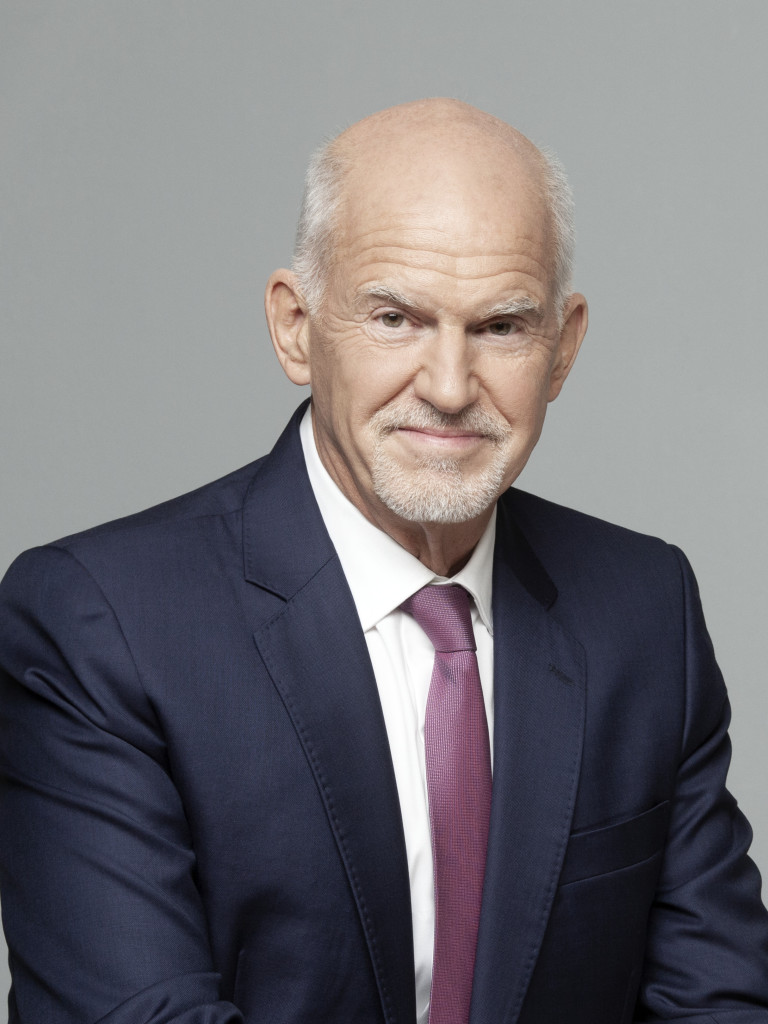
George Papandreou is former Prime Minister of Greece (2009-2011) and currently Member of Parliament with the Panhellenic Socialist Movement/Movement of Change. As an MP, he represents Hellenic Parliament in the Parliamentary Assembly of the Council of Europe, and has chaired over the years several Committees in producing recommendations for deepening democracy, human rights and the rule of law across its 47 member-states. Notably, he currently serves as the General Rapporteur for Democracy of the Parliamentary Assembly of the Council of Europe. From 2006 to 2022, he was President of Socialist International, the largest global political family. Around the world, Papandreou has deployed ‘Green Diplomacy,’ calling for the protection of the environment. In 2010, he was named one of the Foreign Policy magazine’s TOP 100 Global Thinkers. In 2017, he was honored with the International Leadership Association (ILA) Distinguished Leadership Award.
ABOUT THE CREATIVE BUREAUCRACY FESTIVAL
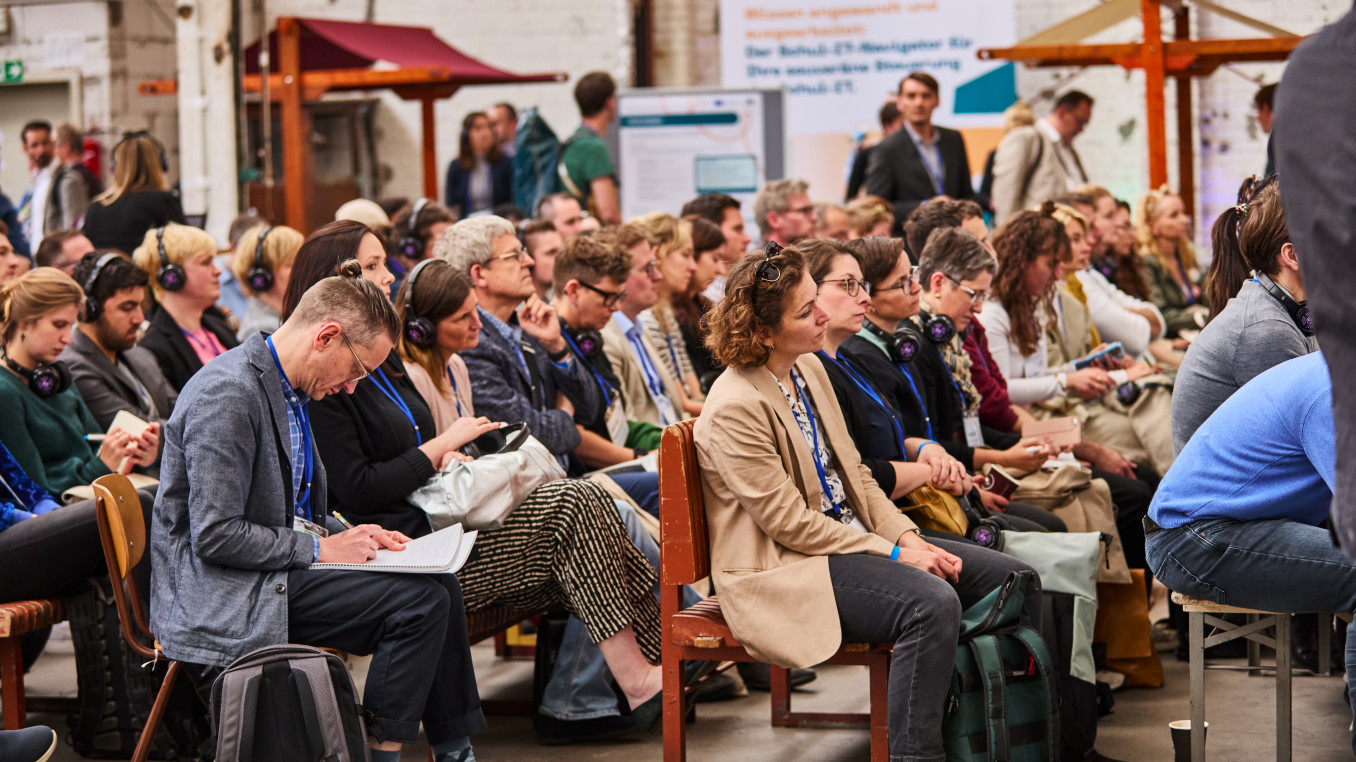
Public administration, too, has excellent, creative solutions for almost every challenge facing society — the Creative Bureaucracy Festival brings them to the stage and the people behind them into conversation. The festival, in the words of its President Charles Landry, stands for the shift from a "No, because" culture to a "Yes, if" culture that embraces new ideas with enthusiasm. Through the presentation of the Creative Bureaucracy Awards, the festival also aims to strengthen the public reputation of administration. The Global Forum of Public Service Leaders, which begins on the day before the festival, is the annual gathering of public sector leaders from around the world. The Young Bureaucrats Event addresses the next generation of creative talent in the public sector. Further information can be found at https://creativebureaucracy.org/.
ABOUT THE GLOBAL FORUM OF PUBLIC SECTOR LEADERS
The Global Forum of Public Service Leaders is an invitation-only international gathering that complements the Creative Bureaucracy Festival. It brings together state leaders, ministers, senior government executives, presidents of public institutions, mayors, agency heads and other senior leaders responsible for shaping and delivering public-sector transformation.
Held in a confidential setting, the Forum creates space for candid exchange, peer learning and international collaboration. It connects leaders facing comparable challenges across different political, administrative and institutional contexts, enabling them to explore how governments can strengthen their capacity to act, innovate and deliver.
The Global Forum takes place in Berlin on the day before the Creative Bureaucracy Festival. Further information on the Global Forum of Public Service Leaders can be found at https://creativebureaucracy.org/global-forum-of-public-sector-leaders.