THE AGE OF TRANSITIONS: FROM SMALL TO BIG MISSIONS
This essay is part of Creative Bureaucracy: Where Next & How?, the 2026 Creative Bureaucracy book conceived and edited by Charles Landry and Sebastian Turner. The publication brings together voices from around the world—including civil servants, designers, scholars and public innovators—to explore where public institutions should go next, and how they can get there.
In his essay, Christian Bason explores the shift from improving individual public services to pursuing ambitious missions for long-term societal change. Drawing on examples from Denmark, Sweden and across Europe, he identifies ten roles that help institutions and their partners turn shared ambitions into collective action—from setting direction and shaping regulation to enabling experimentation and continuous learning.
By Christian Bason
Published: 7 October 2026
To positively evolve the societies they govern, public institutions must increasingly emphasize missions that aim for true systems change and long-term transition. Ten roles can help.
The past nine years of the Creative Bureaucracy Festival have demonstrated the enduring attraction of an innovative public sector. Yet the context has shifted. When I first entered this field more than two decades ago, the frontier of public innovation was largely about new forms of citizen engagement: understanding people’s needs, behaviours and experiences, and co-designing services with them rather than for them.
This approach, often rooted in service design and embedded in innovation teams, helped organisations better fulfil their core missions. It improved responsiveness, strengthened user experience, and increased efficiency—particularly through digital services. These were, in effect, “small m” missions: changes that could typically be realised within a single organisation, with limited implications across other sectors, governments, systems or society as a whole.
Today, however, we operate in a profoundly different context. Climate breakdown, biodiversity loss, rising inequality, public health pressures, social fragmentation, and the disruptive effects of AI all point to what can be called an Age of Transitions. These challenges are systemic, interconnected and deeply uncertain.
In the face of hypercomplex, ambiguous and turbulent problems, public organisations must still deliver on their day-to-day responsibilities and continue improving services. But increasingly they are also called to engage with a different order of ambition—“big M” missions.
Towards “big M” missions
A big “M” mission is understood as a tangible long-term societal outcome pursued and achieved collectively across sectors. It’s realized through a dynamic portfolio of interventions, evolving through learning, feedback and collaboration.
Over the past decade, mission-oriented innovation has gained traction globally. Influenced by work from the Institute for Innovation and Public Purpose (IIPP), the OECD’s Mission Action Lab, and UNDP’s portfolio approaches, missions are now being deployed across all levels of government, and increasingly across philanthropy, civic society and business.
Their power lies in providing a coherent framework for effectively tackling complex problems that no single actor can solve alone. Missions are relevant across domains—from health and education to mobility, social inclusion and climate adaptation. What distinguishes them is not only their ambition, but their distributed nature: they are collectively designed, collectively governed and collectively delivered.
I have been involved in designing and implementing missions across diverse contexts, from my time as CEO of the Danish Design Center to my current role as co-founder of Transition Collective, advising governments globally. A recent evidence-based report with the World Health Organization on innovation scaling points to a powerful approach: governing missions through clearly defined roles. A role describes how value is created to realise a mission. While the WHO framework identifies seven roles, I believe at least ten are essential.
As part of the evolving frontier of societal change—the vanguard of a creative bureaucracy—let us consider these ten roles.
Ten roles to govern and realize missions
1. The direction giver
Articulates long-term purpose and guards the preferred future. This is rarely the job of a single actor; rather, it emerges through co-creation with many organizations. For example, when the Danish Design Center facilitated establishing an EU-funded initiative on sustainable cities, more than 150 actors across architecture, design and industry co-developed the mission “Designing an irresistible circular society”.
2. The governance designer
Builds structures and processes that enable legitimate, trust-based decision-making. In Denmark’s “Home for All Alliance”, the philanthropy Bikubenfonden co-founded a mission to combat homelessness. Its governance model was established across public and civic actors and has endured for more than a decade.
3. The navigator
Maintains momentum by brokering interests across the ecosystem. Often embodied in a mission secretariat, this role ensures continuity over time. In Esbjerg Municipality, a “backbone” function with a 12-year mandate has helped coordinate efforts to reduce youth exclusion, bringing in new partners, such as NGOs and local philanthropies, to increase impact as the mission evolves.
4. The regulator
Adapts rules and frameworks to institutionalize mission-driven outcomes. Regulatory change can be decisive, and when the Danish “Home for All Alliance” helped shift national funding rules, it enabled municipalities to prioritise permanent housing for homeless people, rather than temporary shelters. Its effect has been transformative.
5. The capacity builder
Strengthens the skills, organizational capabilities and infrastructures needed for delivery. The EU-funded New European Bauhaus Academy, for instance, now operates a continent-wide network of training hubs. In effect it is an alliance of actors across the European urban innovation and green transition ecosystem. It is supported by shared quality criteria and standards, a digital one-point entry and comprehensive mapping of training content and providers.
6. The funding enabler
Aligns and helps expand financial resources over the long term. Missions often require blended funding across sectors. The New European Bauhaus has mobilised public, civic and private contributions and doubled its—so far—400 million EUR budget. Denmark’s Green Tripartite agreement to rewild 10% of its nature combined government, the agriculture industry and philanthropic investment at scale. It included Novo Nordisk Foundation’s pledge to fund 25%, or 10 billion DKK, of the 10-year mission.
7. The communicator
Shapes a compelling narrative that builds commitment, legitimacy and momentum. An integral part of mission building, it is best grounded in storytelling co-created with stakeholders. The Danish Design Center, in collaboration with a leading research foundation, established a mission to address stress, anxiety and accelerating psychiatric diagnoses among young people. Its vision for 2050 was a society where young people “thrive”—a narrative developed with young people, local governments, and experts.
It stated: “A future where young people thrive has been realized”, and elaborated: “Imagine this; young people in Denmark are doing better than ever before. Even with the historic challenges facing this generation, they have never had greater influence or more opportunities to shape their own future. Collectively, we have taken responsibility for providing a framework for young people to thrive.”
8. The experimenter
Designs and tests interventions close to practice, embracing intelligent failure as learning. This role is often missed as it underestimates the difficulties in envisaging, building and realizing impactful interventions or takes for granted that the actors involved can design and implement meaningful experiments linked to the overall mission portfolio.
The Swedish government’s innovation fund Vinnova’s Impact Innovation initiative has five missions. One is Water Wise Societies, which aims to ensure sustainable water for Sweden towards 2050. It set up a “Transition Arena” to practically and financially support over 70 organizations to enable their influence, learning and co-creation in pursuing the mission. In the Arena, actors convene biannually, attend digital seminars and “learning breakfasts” to empower them in on-the-ground work to find innovative solutions to the country’s water challenges.
9. The learning hub
Ensures continuous adaptation by collecting and feeding back insights. Without structured learning, missions stagnate. Often neglected, structured learning is essential: how can a mission move forward without a strategy?
The Danish Design Centre’s “Decoupling 2030” initiative worked with five partners to build an 8-year mission for sustainable and circular manufacturing. It established a robust learning model with both quantitative and qualitative feedback systems, to enable informed decisions across a large ecosystem of 4,000 companies and partners involved in the mission. By feeding insights back into governance, the Board can make informed decisions on the mission portfolio. Data collection and analysis were handled by external evaluation and research partners, while overall responsibility remained with the mission’s management.
10. The market shaper
Engages the private sector to create new pathways for impact. In some cases, missions are initiated by private firms. The Danish company Naturli’ catalysed a plant-based food ecosystem by creating an industry association bringing together competitors, regulators and researchers to shift the entire system.
A favorite is Danish food company Naturli’, which develops and produces plant-based alternatives to traditional staples like butter and beef. When CEO Henrik Lund saw the firm had to accelerate the entire market for plant-based food, it established a new association—Plantebranchen. It invited the entire market ecosystem to join, including regulators, research institutions, farmers, and even direct competitors. Why? Because to achieve their mission, Naturli’ needed everyone to take part in shifting the food system towards plant-derived alternatives to build a future market.
Transitioning public services – and the Creative Bureaucracy Festival
Taken together, these ten roles form a governance architecture for long-term collective action. Responsibility is distributed, learning is continuous, and the mission—rather than any single institution—remains the focal point.
This reframes the role of public institutions. They are no longer sole providers or controllers, but participants in a wider ecosystem of change. In this sense, creative bureaucracies become enabling platforms—facilitating collaboration, shaping conditions, and sustaining long-term transitions.
For public sector organisations seeking to address today’s systemic challenges, mission-oriented approaches are no longer optional. They are increasingly essential.
For the Creative Bureaucracy Festival, this represents a significant opportunity. Continuing to explore, test and refine big “M” missions—and the roles that make them possible—can help equip public institutions to navigate the Age of Transitions with imagination, responsibility and impact.
ABOUT THE AUTHOR
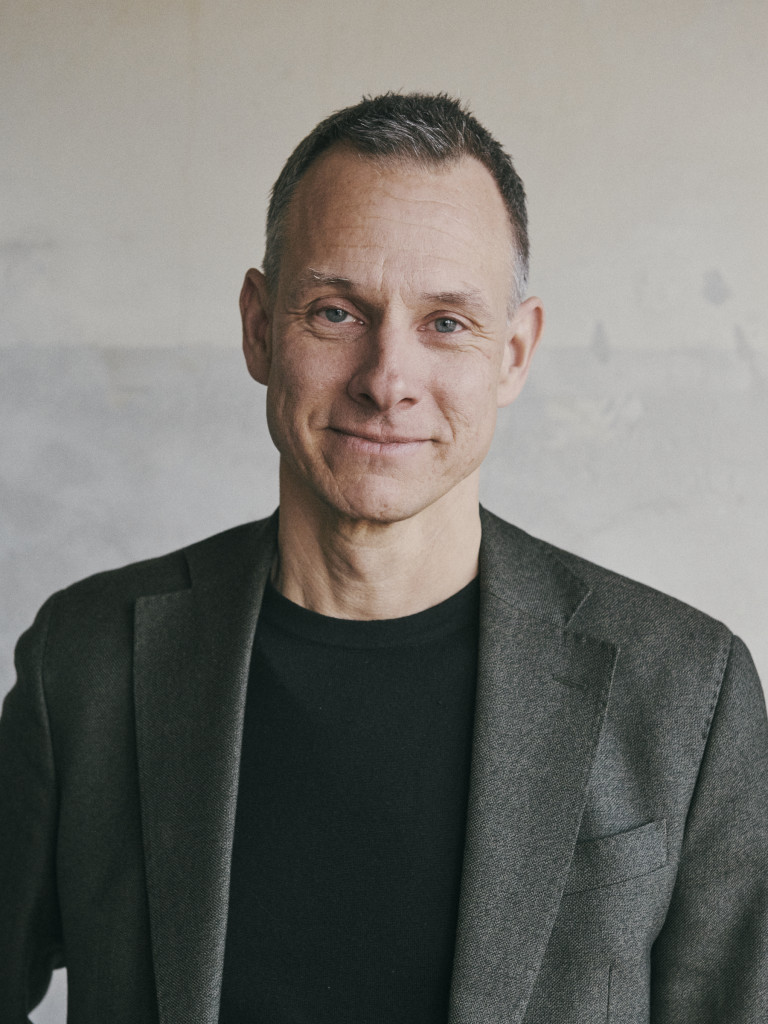
Christian Bason is Co-founder of Transition Collective and Adjunct Professor with University of Technology Sydney. He was formerly CEO of the Danish Design Center, Director of MindLab and Business Manager with Ramboll Management Consulting. He is a frequent keynote speaker and adviser and has extensive experience delivering executive training to business, government and the non-profit sector. He is the author of nine books, including "Expand: Stretching the Future by Design" (2022) and "Leading Public Sector Innovation: Co-creating for a Better Society". Christian holds a Ph.D. in public design, leadership and governance from Copenhagen Business School, an M.Sc. in political science from Aarhus University, and executive education from Wharton and Harvard Business School.
ABOUT THE CREATIVE BUREAUCRACY FESTIVAL
Public administration, too, has excellent, creative solutions for almost every challenge facing society — the Creative Bureaucracy Festival brings them to the stage and the people behind them into conversation. The festival, in the words of its President Charles Landry, stands for the shift from a "No, because" culture to a "Yes, if" culture that embraces new ideas with enthusiasm. Through the presentation of the Creative Bureaucracy Awards, the festival also aims to strengthen the public reputation of administration. The Global Forum of Public Service Leaders, which begins on the day before the festival, is the annual gathering of public sector leaders from around the world. The Young Bureaucrats Event addresses the next generation of creative talent in the public sector. Further information can be found at https://creativebureaucracy.org/.
ABOUT THE BOOK — CREATIVE BUREAUCRACY: WHERE NEXT & HOW?
Creative Bureaucracy: Where Next & How? — The 1st Creative Bureaucracy Global Report 2026 brings together 24 contributors from government, academia, cities, philanthropy, design and public innovation to explore how far the idea of creative bureaucracy has travelled, whether it is making a tangible difference and where the movement should go next. Featuring internationally recognised thinkers and practitioners alongside leading voices from governments, cities and innovation organisations around the world, the report offers a broad range of perspectives on how public institutions can become more capable, humane, imaginative and effective. Its chapters examine themes including the future of the state, public-sector leadership, service design, implementation, civic imagination and the human qualities needed in governance, such as judgement, care, courage, playfulness and agency. Edited by Creative Bureaucracy Festival co-founders Charles Landry and Sebastian Turner, the report seeks to help shape a new operating logic for governance—one that combines imagination with implementation, experimentation with accountability, and public purpose with democratic trust. For more information, contact info@creativebureaucracy.org.